🩸 Veins vs. Arteries: The Easiest Difference
Veins and arteries are both blood vessels.
They look similar, but they do different things.
The easiest way to tell them apart is to ask one question:
👉 Which direction is the blood going?
The answer is revealed below.
Note: This illustration is a simplified visual map for educational purposes, not a medical diagram.
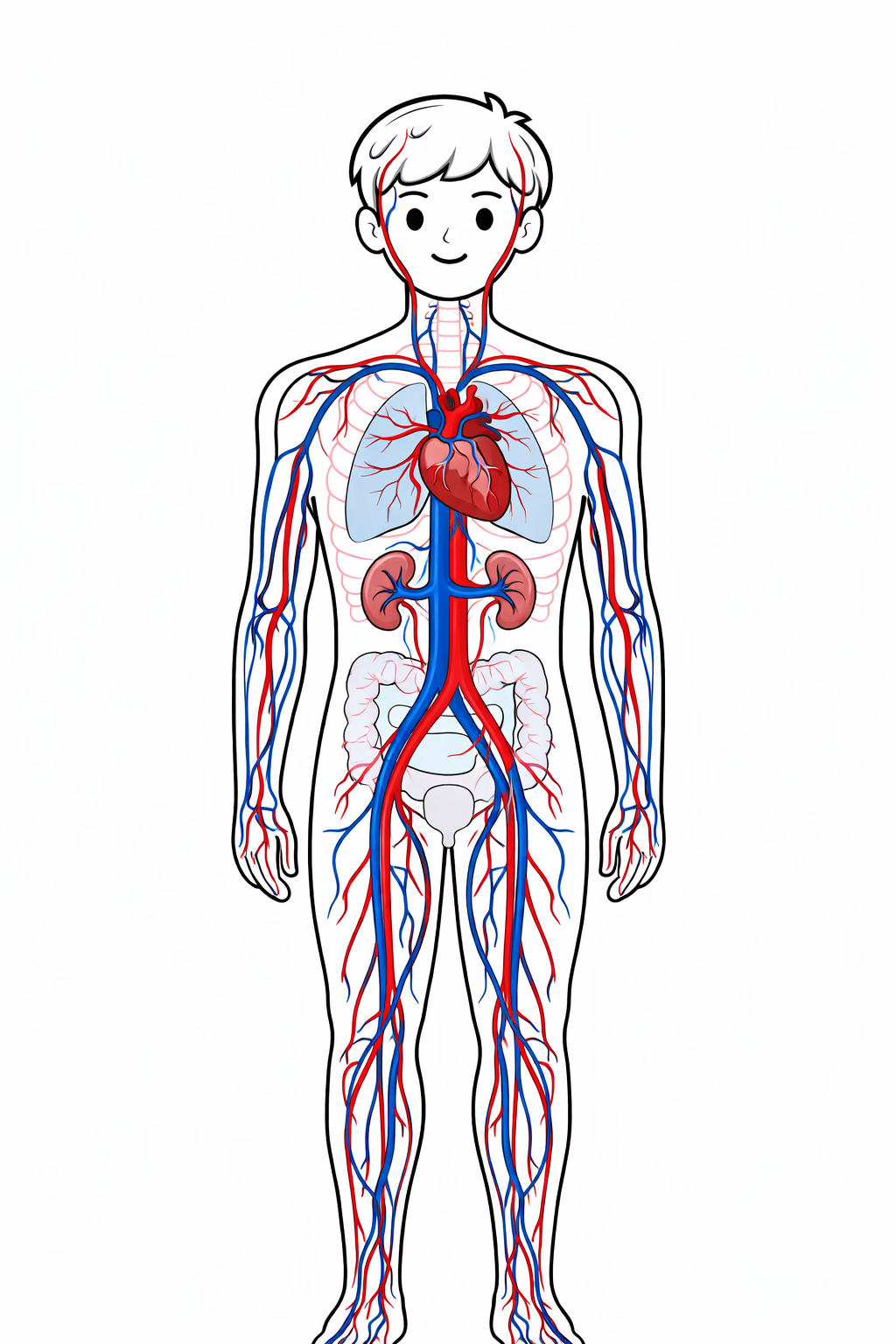
🔁 The One Rule to Remember
Arteries carry blood away from the heart.
Veins carry blood back to the heart.
If you remember this, you understand the difference.
Arteries (From the Heart)
Arteries:
- Carry blood from the heart to the body
- Usually carry oxygen-rich blood
- Have thick, strong walls
- Move blood with strong pressure
- Create a pulse you can feel
Because the pressure is high, bleeding from an artery is often bright red and fast.
Veins (Back to the Heart)
Veins:
- Carry blood back to the heart
- Usually carry oxygen-poor blood
- Have thinner walls
- Move blood with lower pressure
- Have valves to keep blood flowing the right way
This is why veins can become visible or swollen, especially in the legs.
The One Exception
The blood vessels between the heart and lungs are special:
- The pulmonary artery carries oxygen-poor blood to the lungs
- The pulmonary veins carry oxygen-rich blood back to the heart
Even here, the rule still works: 👉 arteries go away, veins go back.
Why Veins Need Valves
Blood in veins often has to move upward, against gravity.
Valves act like one-way doors, stopping blood from flowing backward.
This helps blood return to the heart, especially from the legs.
Key Takeaway
Arteries go away from the heart.
Veins go back to the heart.
That's the simplest and most important difference.
References
- Mayo Clinic — Blood vessels: arteries and veins
- American Heart Association — How Blood Flows Through the Heart and Body
- Encyclopaedia Britannica — Artery and vein | Human anatomy